How Long Does Interstate Car Transport Take? Australian Transit Times
15-Oct-2026How Long Does Interstate Car Transport Take? Transit Times Between Australian Cities
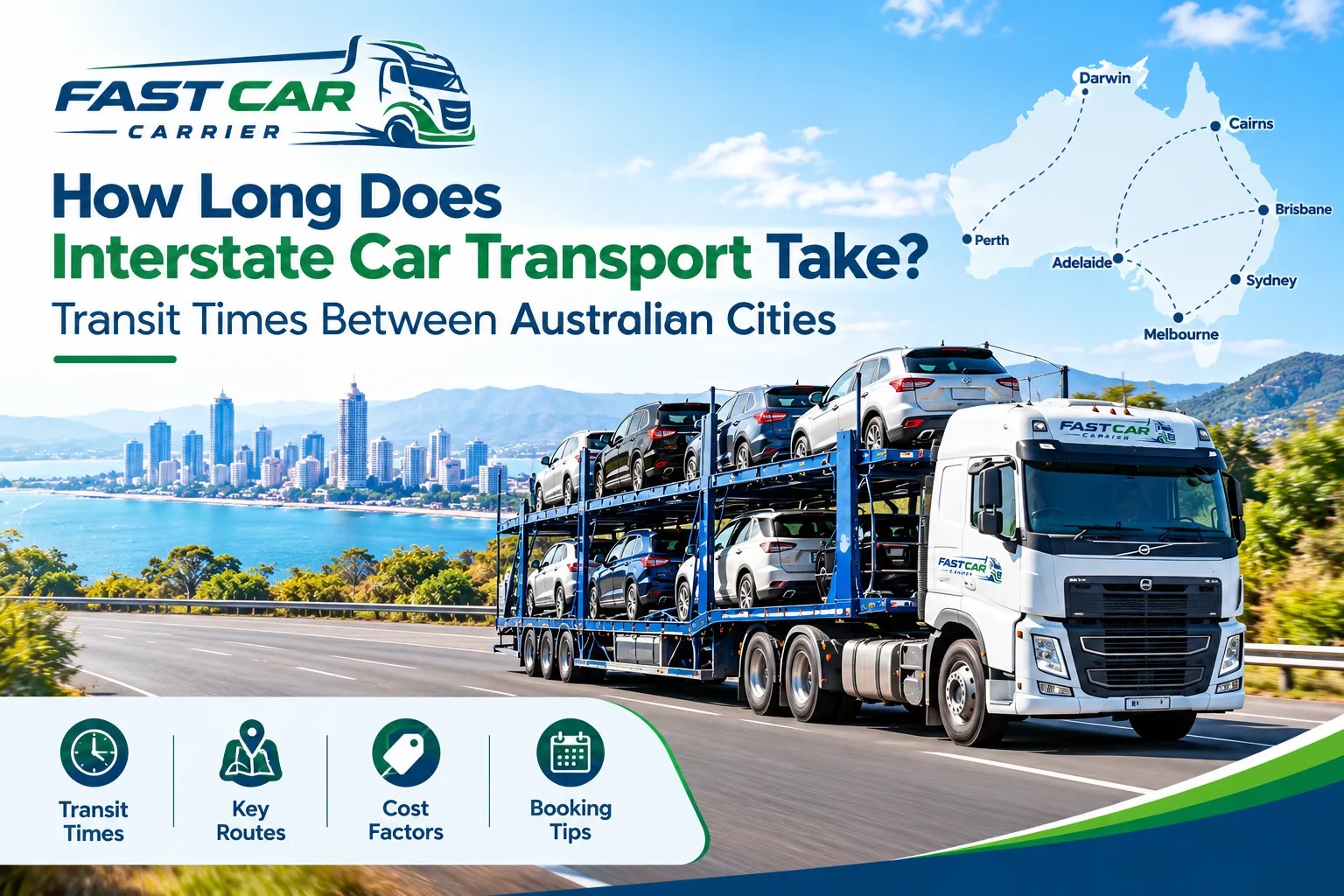
"How long does interstate car transport take?" is usually the first thing people ask when they plan a move. It is a fair question. You may need your car for work, school drop-offs or settling into a new home.
The honest answer depends on your route and a handful of transport factors. A short run between two neighbouring capitals can take a day or two on the road. A long haul across the Nullarbor can take a week or more.
There is one more thing worth knowing early. The time your car spends on the truck is not the same as the time from booking to delivery. This guide explains both, so you can plan with realistic expectations.
How Long Does Interstate Car Transport Take?
Most common interstate routes have an estimated transit time of roughly 1 to 9 days. The exact figure depends on distance and route.
Shorter east-coast and southern routes, such as Sydney and Melbourne, sit at the low end.
Longer routes, such as Brisbane to Perth, sit at the high end.
Routes from the east coast to Western Australia generally take longest, because of the distance involved.
These figures cover transit only. That means the time your vehicle is on the road between pickup and delivery. The full timeframe from booking to delivery can be longer, because it also includes scheduling on both ends.
Interstate Car Transport Transit Times Between Australian Cities
The table below shows Fast Car Carrier's current estimated transit times for major city-to-city routes.
These are estimated transit times, not guaranteed delivery dates. Actual timing can vary depending on scheduling, pickup and delivery locations, road conditions, weather and other transport factors.
A quick way to read the table: the further apart two cities are, the more days to allow. A quote for your own trip will always be more accurate than a general table.
Transit Time vs Total Delivery Time
This is the part most people miss. Transit time is only one stage of the journey. A full interstate car move has several steps.
A simple example
Say a route shows an estimated transit time of 3–4 days. That does not mean your car arrives exactly 3–4 days after you book.
You might book a week before you want the car moved. The carrier then needs to fit your pickup into its schedule. Once the car is collected, the 3–4 day transit estimate begins. After that comes delivery coordination.
So the total time from booking to delivery is usually longer than the transit estimate alone. The gap varies from job to job, which is why it pays to ask your provider about both.
What Affects Interstate Car Transport Times?
Many small things add up. Here are the main ones.
Price also depends on many of these same factors. If you are weighing cost alongside timing, the guide to the vehicle transport shipping price breakdown explains what usually goes into a quote.
Why Longer Australian Routes Take More Time
Australia is a big country, and the distances show it. Routes involving Perth are a good example. Here is why they take longer:
Greater road distance. Crossing the continent means thousands of kilometres of road.
Long-haul route planning. Drivers have rest requirements, and trucks may travel on set schedules.
Carrier scheduling. Fewer long-distance departures can mean more time between available runs.
Regional access. Long routes often pass through remote stretches where services are limited.
Weather and road conditions. The longer the trip, the more chances of bad weather or roadworks.
Pickup and delivery coordination. Arranging a handover at each end takes time.
Here is how the main Western Australia routes compare:
If you are planning that last one, our guide to Brisbane to Perth car transport covers the route in more detail.
Does Door-to-Door Car Transport Take Longer?
Door-to-door means the carrier collects your car from your address and delivers it to your destination address. It is convenient, because you do not have to drive to a depot.
Door-to-door does not automatically mean slower. But the exact locations matter, because a car transporter is a large vehicle.
When access is difficult, the driver may suggest a nearby safe meeting point, such as a wide street or a car park. This is common and usually practical. It can keep things moving rather than slowing them down.
For a fuller explanation, read about how door-to-door car transport works.
Does Vehicle Type Affect Transport Time?
Vehicle type does not always change the timeframe. But it can influence how a job is planned.
None of this means a particular vehicle will definitely take longer. It means the right details help your provider plan properly. Confirm anything specific to your car when you request a quote.
Open vs Enclosed Transport and Delivery Time
There are two main ways to move a vehicle.
Is one faster than the other? Not necessarily. Enclosed transport is not always faster or slower. Availability on your route is what matters, because the right type of truck needs to be heading your way. That can affect when a pickup is possible.
If you are deciding between the two, this breakdown of open vs enclosed car transport can help.
How Weather and Road Conditions Can Affect Delivery
Interstate transport means long hours on Australian roads. Conditions change, and some of them are outside anyone's control.
Any of these can change a delivery schedule. For this reason, responsible transport providers avoid promising exact delivery dates. An estimate that allows for real conditions is more honest than a firm date that may not hold.
If your trip is close to a major weather event, ask your provider for the latest information on your route.
How Far in Advance Should You Book?
There is no single rule that suits everyone. But the planning principle is simple: allow enough time for every stage, not just the drive.
Leave room for:
Booking and confirming your details
Carrier scheduling
Pickup coordination
Interstate transit
Delivery coordination
If you have a strict date, such as a lease ending or a start date at a new job, arrange transport as early as practical. That gives your provider more options when planning your pickup.
Metro and regional routes can also differ. A capital-to-capital run may have more flexibility. A regional pickup may need extra time to fit around available runs. When you ask for a quote, mention your ideal dates and how flexible you can be.
How to Plan Around Your Car Transport Timeframe
An estimate is easier to live with when you build a little breathing room around it. These tips help, especially if you are relocating.
Avoid tight appointments after delivery. Do not book an important meeting or interview for the day your car is due to arrive.
Allow flexibility around estimated arrival. Treat the estimate as a window, not a deadline.
Keep a backup plan. Know how you will get around if your car is a day or two late. Public transport, a rental car or a lift from a friend can fill the gap.
Coordinate your move carefully. If you are moving house, line up accommodation and removalist dates with a buffer.
Keep your provider updated. If your address, dates or contact details change, tell them as soon as you can.
Confirm details before pickup. Double-check the pickup address, delivery address, access arrangements and contact numbers.
A little flexibility goes a long way. People who plan with a buffer tend to find the whole process much less stressful.
How to Track and Stay Updated During Transport
Good communication matters as much as the drive itself. When your car is on the road, you want to know what is happening. Ask your provider about these before you book:
Clear answers to these questions tell you a lot about how a company works. Keep your phone on and reply promptly when the carrier gets in touch. That helps handover go smoothly.
You can also use it as a test when comparing companies. This guide on mistakes to avoid when choosing an interstate car transport company is worth reading before you commit.
How to Prepare Your Car for Interstate Transport
A prepared car makes pickup quicker and avoids last-minute problems. Cover these basics:
☐ Remove personal belongings: take out valuables, documents and loose items
☐ Photograph the vehicle: take clear photos from every angle, inside and out
☐ Document existing damage: note any scratches, dents or chips before pickup
☐ Check vehicle condition: look at tyres, fluids and the battery
☐ Confirm keys: make sure the driver will have a working set
☐ Disclose a non-running condition: tell your provider if the car will not start or steer
☐ Confirm pickup details: check the address, time window and contact person
For a more complete checklist, see how to prepare your car before interstate transport.
Interstate Car Transport vs Driving Yourself
Some people wonder whether driving is the better option. It depends on your situation. Here is a balanced look.
Transport is not always cheaper. On a short route, driving may cost less. On a long route, the fuel, accommodation and time away can add up fast. Compare real numbers for your own trip.
For a deeper look, read about interstate car transport vs driving.
How to Avoid Delays With Interstate Car Transport
You cannot control the weather. But you can control a lot of the small stuff. Use this checklist.
☐ Provide accurate vehicle details
☐ Give the correct pickup address
☐ Give the correct delivery address
☐ Mention if the vehicle does not run
☐ Mention any modifications
☐ Confirm that the pickup spot is accessible for a large truc
☐ Have the keys ready
☐ Remove personal belongings
☐ Keep your contact details up to date
☐ Allow flexibility around the estimated delivery
Most avoidable delays come from missing or incorrect information. Getting these basics right makes the job smoother for everyone.
Frequently Asked Questions
How long does interstate car transport usually take in Australia?
Most common routes have an estimated transit time of roughly 1 to 9 days, depending on distance. The full timeframe from booking to delivery can be longer.
How long does it take to transport a car from Melbourne to Sydney?
The estimated transit time is approximately 1–2 days. Scheduling for pickup and delivery is separate and can add to the total.
How long does Brisbane to Melbourne car transport take?
The estimated transit time is approximately 3–4 days. This is an estimate only, not a guaranteed delivery date.
How long does car transport from Sydney to Perth take?
The estimated transit time is approximately 6–8 days. Long routes can be affected by distance, scheduling, weather and road conditions.
Why do some interstate routes take longer?
Longer routes cover more distance and often involve fewer scheduled runs. They also pass through more regional areas, where weather and road conditions can change.
Is interstate car transport time guaranteed?
No. Transit times are estimates. Weather, road conditions and scheduling can all affect delivery. A delivery date should only be treated as firm if your provider has explicitly confirmed it.
Does door-to-door transport affect delivery time?
It can, depending on access. Narrow streets, tight driveways and remote addresses may affect scheduling. A nearby safe meeting point is sometimes used instead.
Can a non-running car be transported interstate?
Often yes, but you must tell your provider upfront. A non-running vehicle may need special loading equipment, so it needs to be planned for.
How far in advance should I book interstate car transport?
Book as early as practical, especially if you have a firm moving date. Allow time for booking, scheduling, pickup, transit and delivery.
Can weather or road conditions delay vehicle transport?
Yes. Storms, flooding, road closures, traffic incidents and roadworks can all affect schedules, particularly on long interstate routes.
Planning Your Interstate Car Move
The right timeframe depends on your route, your vehicle and how flexible you can be. A transit estimate is a helpful starting point. It is not the full story.
If you would like a quote, you can contact Fast Car Carrier to discuss your route, your vehicle and your preferred timeframe. Have your pickup and delivery details ready, and mention any special requirements such as a non-running vehicle or enclosed transport.