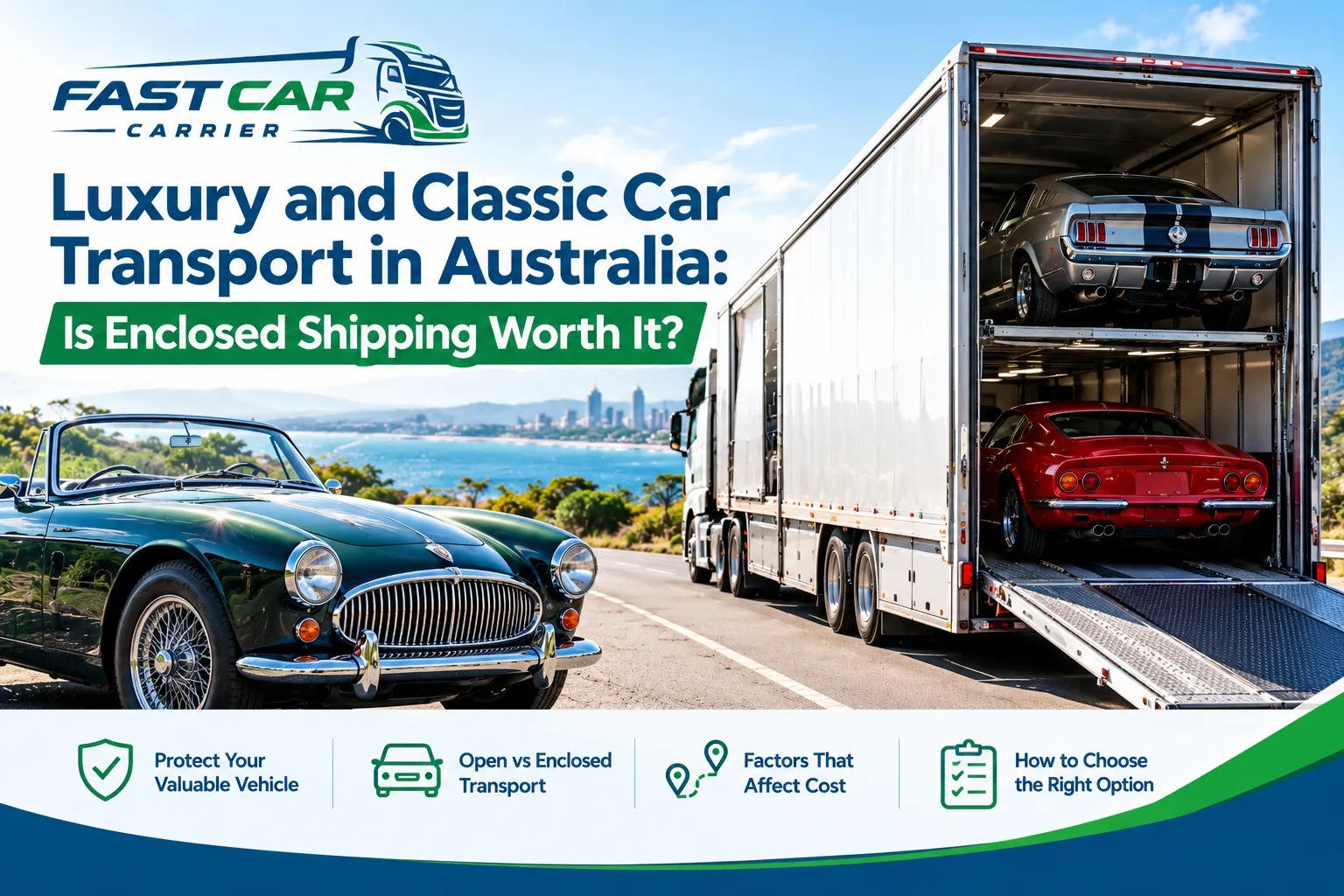
Luxury and Classic Car Transport Australia: Is Enclosed Worth It?
17-Oct-2026Moving an everyday hatchback is one thing. Moving a restored classic or a high-value prestige car is another.
With a car like that, small things matter. A stone chip on original paint. A scratch on a polished wheel. A week of rain on a car that has never been rained on. Even a rushed loading job can cause trouble.
That is why luxury and classic car transport Australia owners look for is rarely just "the cheapest way to get it there". They want to know how the car will be loaded, what it will be exposed to, and who will be handling it.
This leads to the big question: is enclosed car transport worth it for a luxury or classic vehicle?
The honest answer is "it depends". It depends on the car, the route and what you are comfortable with. This guide walks through the factors so you can decide for yourself.
What Is Luxury and Classic Car Transport?
In simple terms, it is the interstate transport of vehicles that need more care than a standard car.
That might be a 1960s muscle car, a restored vintage sedan or a collector's special edition. It might also be a premium performance car, a luxury sedan or a prestige SUV.
These vehicles often need extra planning because of:
• Higher value and sentimental value
• Rare or hard-to-replace parts
• Original or freshly restored paintwork
• Low ground clearance
• Modifications such as body kits, lowered suspension or wide wheels
• Age and mechanical condition
• Special handling needs, such as a car that does not run
The transport method you choose affects how exposed the car is on the road. It also affects cost and booking options. So it is worth thinking it through before you request quotes.
What Is Enclosed Car Transport?
Enclosed car transport means your vehicle travels inside a covered carrier. The sides and roof are closed in, so the car is not out in the open air.
In general, this can mean:
• Less weather exposure. Rain, hail, sun and wind have less chance to reach the car.
• Less road dust and debris. Stone chips and grime are less likely than on an open deck.
• More privacy. The car is not on display to everyone on the highway.
• Extra protection for sensitive vehicles. This suits cars with delicate or valuable finishes.
Enclosed transport reduces certain risks. It does not remove every risk. Loading, unloading, road conditions and handling still matter, whatever type of carrier is used.
What Is Open Car Transport?
Open transport uses a carrier where vehicles sit on exposed decks. It is the most common way to move cars around Australia.
Here is what to know:
• Vehicles are professionally secured to the carrier for the journey.
• It suits most everyday vehicles.
• It is usually the more cost-effective option.
• The car is exposed to weather and road conditions.
Open transport is not automatically wrong for a luxury or classic car. Plenty of owners use it for well-kept vehicles, especially when budget or timing matters. The key is to choose it knowingly, not by default.
Enclosed vs Open Car Transport for Luxury and Classic Vehicles
Here is a general comparison. Details vary by carrier, route and vehicle.
Feature | Open Transport | Enclosed Transport |
Weather exposure | Exposed to sun, rain, wind and hail | Largely shielded from the elements |
Road debris exposure | Exposed to dust, grit and stones | Reduced exposure |
Privacy | Vehicle is visible on the carrier | Vehicle is out of public view |
Protection level | Standard protection for transport | Added protection from the environment |
Vehicle suitability | Many everyday and well-kept cars | Valuable, rare or sensitive vehicles |
Cost considerations | Usually lower | Usually higher |
Classic vehicle suitability | Can suit sturdier or less rare classics | Often preferred for rare, restored or original-paint classics |
Luxury vehicle suitability | Can suit some late-model premium cars | Often preferred for exotic, high-value or special-edition cars |
Modified vehicle considerations | Depends on clearance and modifications | Depends on clearance and modifications |
Long-distance transport | Longer exposure to changing conditions | Less exposure over a long trip |
Notice the modified vehicle row. Lowered cars and cars with body kits need careful loading on either type of carrier. Always tell your transport company about them.
For a fuller look at the basics, see this guide to open vs enclosed car transport.
Is Enclosed Shipping Worth It for a Classic Car?
For many classic cars, enclosed transport is worth serious consideration. It is not mandatory in every case.
Enclosed transport may be particularly worthwhile when:
• The car is rare or hard to replace
• It has been fully restored
• It still wears original paintwork
• It is a valuable collector car
• It has a delicate finish, such as fresh paint or period chrome
• It sits low to the ground
• It is travelling a long interstate distance
• You want to keep environmental exposure to a minimum
On the other hand, some owners reasonably consider open transport. For example, a sturdy classic that is driven regularly may not need the same level of cover. A car that already lives a "working life" on the road may be a different story to a show car.
If you are leaning towards open transport, talk it through with your transport provider first. Describe the car honestly. Ask what they would recommend and why.
Is Enclosed Shipping Worth It for a Luxury Car?
Luxury vehicles cover a wide range. That includes premium performance cars, exotic cars, luxury sedans, prestige SUVs and special editions.
Owners often prefer extra protection because of:
• Paintwork. Premium paint is expensive to correct or respray.
• Wheels. Alloy and forged wheels can be costly to repair.
• Low-profile tyres. These can be sensitive to loading angles and rough handling.
• Body kits and aero parts. These often sit close to the ground.
• Ground clearance. Many performance cars sit low and need careful ramps.
• Interior and exterior condition. A near-perfect car has more to lose.
• Vehicle value. A higher value means a higher cost if something goes wrong.
Not every luxury car needs enclosed transport, though. A late-model prestige SUV with good clearance may travel well on an open carrier. A low, rare or special-edition car may be a stronger candidate for enclosed. The car's condition and your own risk tolerance matter more than the badge.
What Are the Main Benefits of Enclosed Car Transport?
Here are the benefits in plain terms:
• Reduced weather exposure. Rain, sun and wind have less contact with the car.
• Reduced road dust and debris. This helps the finish on a long trip.
• Greater privacy. Useful for high-profile or unreleased vehicles, or owners who prefer discretion.
• Additional protection. The covered carrier adds a layer between the car and the road environment.
• Better suitability for sensitive finishes. Fresh paint and original surfaces often benefit.
• A suitable option for high-value vehicles. Many owners feel it matches the car's worth.
• Potential peace of mind. For collectors, this can be a big factor.
Keep expectations realistic. Enclosed transport lowers exposure. It does not make a trip risk-free.
What Are the Downsides of Enclosed Transport?
It is not the right choice for everyone. Consider these points:
• Higher cost in many cases. Enclosed carriers usually cost more than open ones.
• Availability may vary. Fewer enclosed carriers run on some routes.
• Scheduling may differ. You may need to be flexible with pickup and delivery windows.
• Not every route or vehicle needs it. A short trip in mild weather for a sturdy car may not justify the extra spend.
The fair way to weigh this is to compare the extra cost against the car's value, condition and importance to you.
How Much Does Luxury or Classic Car Transport Cost?
No honest article can give you a single fixed price. Quotes depend on your situation. These are the main factors:
• Distance
• Pickup and delivery locations
• Vehicle size and weight
• Vehicle condition
• Whether the car runs
• Open or enclosed transport
• Special handling needs
• Vehicle modifications
• Seasonal demand
• Carrier availability
• Pickup and delivery requirements
This is why two cars on the same route can get different quotes. One may be a standard-height sedan that drives on and off. The other may be a lowered classic that does not run and needs winching. The work involved is different, so the price can be too.
To understand how quotes are built, read about what is included in a car transport quote.
How to Prepare a Classic or Luxury Car for Transport
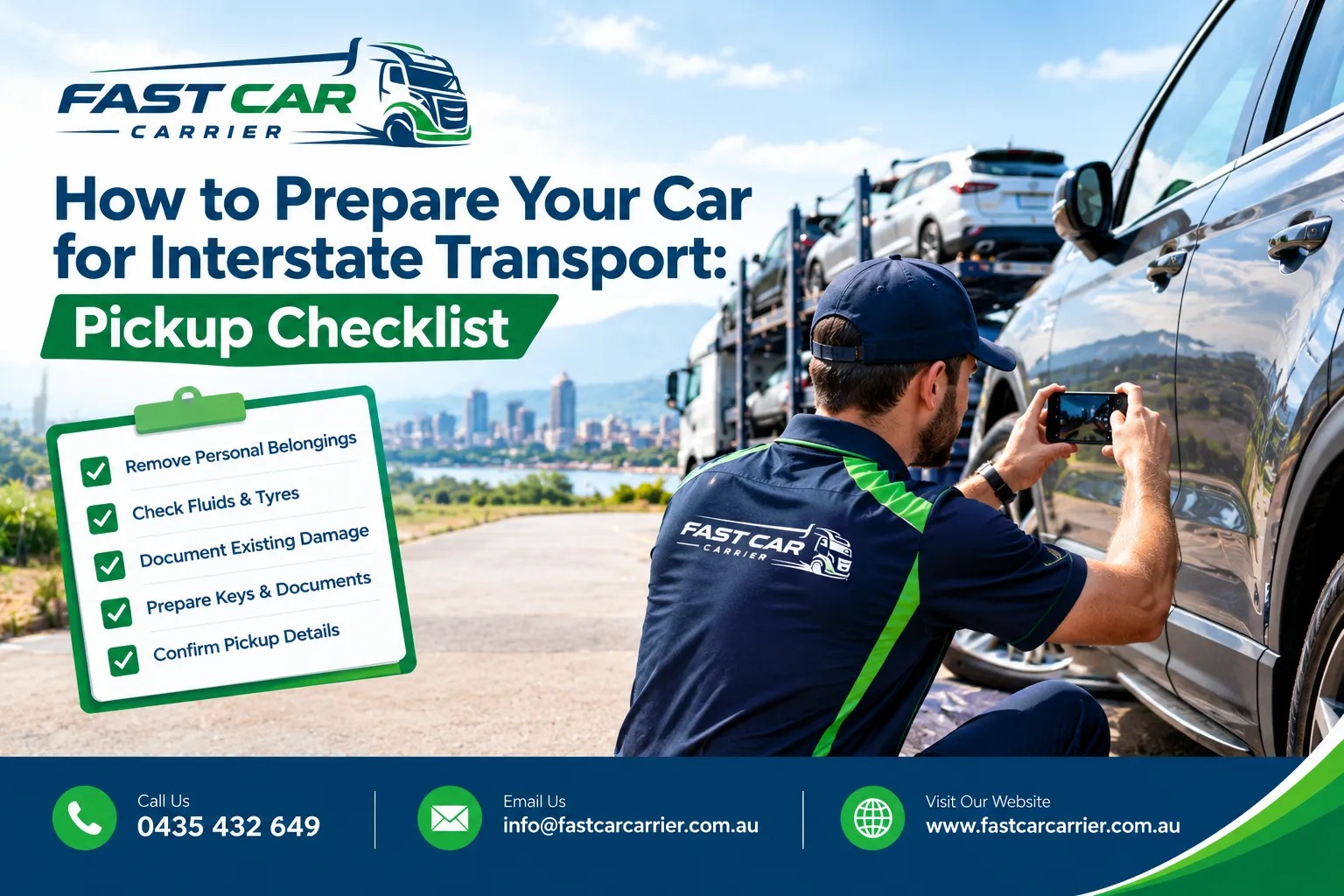
Good preparation protects you as well as the car. Here is a practical checklist:
• Remove personal belongings. Loose items can shift or get lost, and are usually not covered by carriers.
• Photograph the vehicle. Take clear photos of every panel, the wheels and the interior.
• Document existing damage. Note every scratch, chip and dent before pickup.
• Check tyre condition. Make sure tyres are inflated and sound.
• Look for visible leaks. Tell the carrier about any fluid leaks.
• Confirm the car's condition. Be clear about whether it starts, steers and brakes.
• Tell the carrier about modifications. This includes lowered suspension, spoilers, body kits and wide wheels.
• Mention low ground clearance. This affects ramps and loading.
• Prepare the keys. Have all keys ready, plus any special instructions for starting the car.
• Confirm pickup and delivery details. Check addresses, access and contact numbers.
• Discuss special handling. If the car has quirks, such as a manual choke or fragile trim, say so.
Detailed information matters because the carrier plans loading around it. Surprises on the day can cause delays or extra charges. For a broader checklist, see how to prepare your car before interstate transport.
Why Vehicle Condition Matters
Condition affects how a car is loaded, which equipment is needed and how the job is priced.
• Running vehicles can usually be driven on and off the carrier.
• Non-running vehicles may need special loading equipment, such as a winch. Always tell the carrier before booking.
• Accident-damaged vehicles may have sharp edges, loose parts or compromised steering.
• Restored vehicles may have fresh finishes that need gentle handling.
• Modified vehicles may have unusual height, width or weight.
• Low-clearance vehicles may need ramps, extra care or a different carrier setup.
Be upfront at the quote stage. Disclosing a problem early is much better than surprising the driver at pickup.
Long-Distance Interstate Moves for Classic and Luxury Cars
Distance changes the picture. A longer trip means more time on the road, more varied weather and more handling points.
Think about:
• Weather. A trip across several states can mean sun, rain and wind.
• Road conditions. Roads and surfaces vary across the country.
• Distance. Longer trips mean more exposure time.
• Carrier scheduling. Long routes often depend on carrier availability and route timing.
• Pickup and delivery. Plan access at both ends.
• Vehicle preparation. Careful prep matters more when the trip is long.
None of this means a long trip automatically needs enclosed transport. It simply means exposure is worth considering. If you are comparing transport with driving the car yourself, this guide on interstate car transport vs driving covers the trade-offs. It also helps to understand how long interstate car transport takes before you set a delivery date.
How to Choose the Right Transport Option
Ask yourself a few honest questions.
Choose enclosed transport if:
• The vehicle is highly valuable
• It is rare or difficult to replace
• The paintwork is especially important
• It has a delicate or restored finish
• You want extra protection from weather and road debris
• Peace of mind is a major priority
Consider open transport if:
• The vehicle is less sensitive to exposure
• You are comfortable with open transport
• The car does not need additional protection
• Budget is an important factor
Your final decision should weigh the car, your risk tolerance and the transport provider's recommendation. A good provider will explain the options instead of pushing one.
Door-to-Door Transport for Luxury and Classic Cars
Door-to-door transport means the carrier picks up and delivers as close to your addresses as is safe and practical.
For premium vehicles, it can help because:
• You avoid driving the car to a depot
• It is more convenient
• Pickup and delivery can be coordinated with you
• It reduces extra handling
There are limits. Large carriers cannot always get down narrow streets, steep driveways or tight estates. In that case, you may need to agree on a safe nearby meeting point, such as a wide street or car park. Discuss access in advance.
For more detail, read about how door-to-door car transport works. If you are interested in this for a specific route, confirm availability with the provider.
How to Compare Quotes for Luxury or Classic Car Transport
The cheapest quote is not always the best choice. Two quotes may look similar but cover different services.
Compare these points side by side:
• Transport method. Open or enclosed?
• Pickup and delivery arrangements. Door-to-door, or a depot?
• Estimated timeframe. How long, and how firm is it?
• Vehicle handling. How will your specific car be loaded?
• Communication. Will you get updates?
• What is included. Are there extra fees?
• Additional requirements. Anything the company needs from you?
• Insurance information. Ask the company what cover applies and request it in writing.
Do not assume insurance details. Ask for the specifics from the provider and read them carefully.
Common Mistakes When Transporting a Classic or Luxury Car
Avoid these:
• Choosing on price alone
• Not disclosing modifications
• Forgetting to mention low ground clearance
• Not documenting existing damage
• Leaving personal belongings inside
• Not checking pickup access
• Failing to say the car does not run
• Booking without understanding the transport method
• Assuming enclosed transport removes every risk
For more on this, see these common mistakes when choosing an interstate car transport company.
Frequently Asked Questions
Is enclosed car transport better for classic cars?
Often it is a strong option, especially for rare, restored or original-paint classics. It depends on the car's condition and your priorities.
Is enclosed shipping worth it for a luxury car?
It can be, particularly for high-value, low-clearance or special-edition cars. A sturdier late-model car may do fine on an open carrier.
What is the difference between open and enclosed car transport?
Open carriers leave vehicles exposed to the elements. Enclosed carriers cover the vehicle for greater protection and privacy. Enclosed is usually the more expensive option.
Does enclosed car transport protect a vehicle from weather?
It reduces exposure to rain, sun, wind and hail. It does not remove every transport risk.
Is enclosed transport more expensive?
In many cases, yes. Quotes depend on your route, vehicle and availability.
Can modified classic cars be transported?
Yes, in many cases. Tell the carrier about every modification, especially lowered suspension, body kits and unusual dimensions.
Can non-running luxury cars be transported?
Often they can, but they may need special loading equipment. Tell the company before you book.
Should I choose enclosed transport for a restored classic car?
Many owners do, because of the investment in the restoration. Discuss your options with the provider and weigh the cost.
How should I prepare a luxury car for interstate transport?
Remove personal items, photograph the car, document existing marks and disclose modifications. Confirm the pickup details too.
Is door-to-door transport available for classic and luxury vehicles?
Door-to-door is often available, depending on access and route. Confirm details with the provider.
Final Verdict: Is Enclosed Shipping Worth It?
For many high-value, rare, restored, classic and luxury vehicles, enclosed transport is worth considering. It offers extra protection from weather and road exposure.
But it is not automatically necessary for every premium car. The right choice depends on:
• Vehicle value
• Vehicle condition
• Distance
• Transport route
• Protection requirements
• Budget
• Owner preference
If the car is irreplaceable or freshly restored, enclosed often makes sense. If it is a robust vehicle on a straightforward trip, open transport may be perfectly reasonable. What matters is making the call with clear information.
Talk to Fast Car Carrier About Your Vehicle
If you are weighing up luxury and classic car transport Australia options, contact Fast Car Carrier. You can discuss your vehicle, your route and your preferred transport method, and ask any questions before you decide.
When you request a quote, give accurate details. Include the make, model, condition, modifications and ground clearance. Say whether the car runs. Add your pickup and delivery locations.
Fast Car Carrier
Phone: 0435 432 649
Email: info@fastcarcarrier.com.au
Website: https://www.fastcarcarrier.com.au/