Car Transport for Dealers: Fleet Relocation in Australia
20-Oct-2026Vehicles rarely stay where they are in a dealership. Stock moves between branches. A customer buys a car that sits in another state. A batch arrives from an auction two states away. A fleet needs rebalancing before the end of the month.
Someone has to get those vehicles from A to B. Sending staff to drive every one of them takes people off the floor and adds kilometres to stock you are trying to sell.
That is why many businesses use professional transport. So how does car transport for dealers work in Australia? This guide explains the process, the planning involved, what affects cost and timing, and how to choose a provider you can rely on.
What Is Dealer Car Transport?
Dealer car transport means moving vehicles on behalf of a business instead of a private owner. It covers:
- Car dealerships and dealer groups
- Vehicle retailers and wholesalers
- Fleet operators
- Other automotive businesses
It helps to separate three terms.
Type | What it usually involves |
Private vehicle transport | One privately owned car, one pickup, one delivery |
Dealer vehicle transport | One or more vehicles moving between dealerships, auctions, workshops or customers |
Fleet relocation | A larger planned movement of vehicles, often across several locations |
The main difference is complexity. A private move is usually one car and one address. A dealer move can involve several vehicles, different pickup points, business-hours access and a receiving team that needs to be ready.
How Does Fleet Relocation Work in Australia?
Not every fleet move follows the same path. Larger jobs may need extra coordination. In general, the process looks like this.
Step 1: Identify the vehicles that need to move. List every vehicle, including make, model and year.
Step 2: Confirm pickup locations. This might be one dealership or several sites.
Step 3: Confirm delivery locations. Check that each receiving site can accept a carrier.
Step 4: Provide vehicle details. Include size, condition, modifications and whether each vehicle runs.
Step 5: Request a transport quote. Accurate details lead to a more accurate quote.
Step 6: Plan carrier scheduling. The provider matches your vehicles to carrier availability and the route.
Step 7: Prepare vehicles for pickup. Keys, paperwork and condition notes should be ready.
Step 8: Inspection and collection. Each vehicle is checked and loaded.
Step 9: Interstate transportation. The carrier travels the planned route.
Step 10: Delivery and handover. The receiving dealership checks each vehicle against its records.
When Do Car Dealers Need Vehicle Transport?
Here are the most common situations.
- Dealer-to-dealer transfers: Moving a vehicle to another dealership or branch that has a buyer.
- Interstate stock movement: Shifting stock to a state where demand is stronger.
- New vehicle arrivals: Moving new stock from a port, depot or compound to the showroom.
- Used vehicle purchases: Collecting trade-ins or private purchases from another city.
- Auction vehicle collection: Getting wholesale buys to your yard.
- Fleet replacement: Moving outgoing and incoming fleet vehicles.
- Branch relocation: Moving stock when a site opens, closes or moves.
- Excess inventory movement: Relocating slow stock to a better market.
- Customer vehicle delivery: Delivering a sold vehicle to a buyer in another state.
- Preparation or repair relocation: Sending vehicles to a workshop, detailer or panel shop.
- Seasonal stock balancing: Adjusting stock to match regional demand.
Why Dealerships Use Professional Car Transport
Professional transport is not always the cheapest option. But it can solve real operating problems.
- It saves staff driving time.
- It avoids adding kilometres to stock.
- It helps coordinate several vehicles in one booking.
- It makes long-distance transfers easier to organise.
- It lets you plan movements around sales and delivery dates.
- It removes the need to find a driver for every vehicle.
How Multiple Vehicle Transport Works
Moving several vehicles is not simply a larger version of moving one. Each extra vehicle adds a question.
- Quantity: How many vehicles are moving, and are they all ready at once?
- Size: A small hatchback and a dual-cab ute use space differently.
- Pickup locations: One yard or several?
- Delivery locations: One destination or many?
- Carrier availability: Scheduling depends on what is on the road.
- Vehicle condition: Running and non-running vehicles load differently.
- Loading requirements: Access, space and ramps matter.
- Route planning: Stops and sequence affect the plan.
Every provider works differently, so ask what they can handle rather than assuming a limit. Larger movements usually need more detailed coordination up front.
What Types of Vehicles Can Dealers Transport?
Dealers commonly move:
- Passenger cars and SUVs
- 4WDs and utes
- Performance and luxury vehicles
- Classic vehicles
- Used stock and trade-ins
- Fleet vehicles
- Modified vehicles, where transport requirements allow
Always disclose size, condition and modifications before booking. A lifted 4WD, a lowered sports car or a vehicle with a roof rack can change how it is loaded.
Open vs Enclosed Transport for Dealers
Open transport is the common choice for standard dealership vehicles. It suits many everyday stock movements and is often a cost-effective option.
Enclosed transport gives extra protection from weather and road exposure. It may suit luxury, classic, exotic or high-value vehicles, or any vehicle where protection matters more.
Enclosed is not automatically needed for every vehicle on your lot. Many dealers use open transport for core stock and enclosed for premium vehicles. Our guide to open vs enclosed car transport covers the trade-offs in more detail.
What Affects Dealer Car Transport Cost?
Prices vary too much to quote a number here. What matters is what shapes the quote.
- Number of vehicles
- Distance and route requirements
- Pickup and delivery locations, including multiple points
- Vehicle type, size and weight
- Vehicle condition, and whether it runs
- Open or enclosed transport
- Special handling
- Seasonal demand
- Carrier availability
- Scheduling requirements
A fleet quote often needs more information than a single-car quote. The provider has to understand the whole movement, not just one trip. If you want to know more, read about what is included in a vehicle transport quote.
How Dealers Should Plan Vehicle Pickups
Poor pickup planning is one of the easiest ways to delay a job. Before collection day, confirm:
- Dealership opening hours
- Whether every vehicle is actually available
- Safe access for a carrier
- Where loading will happen
- Where the keys are
- Who is on site and who the contact person is
- Whether multiple vehicles will be ready together
Larger carriers may need adequate space to load safely. Ask the provider what they need for your site rather than guessing.
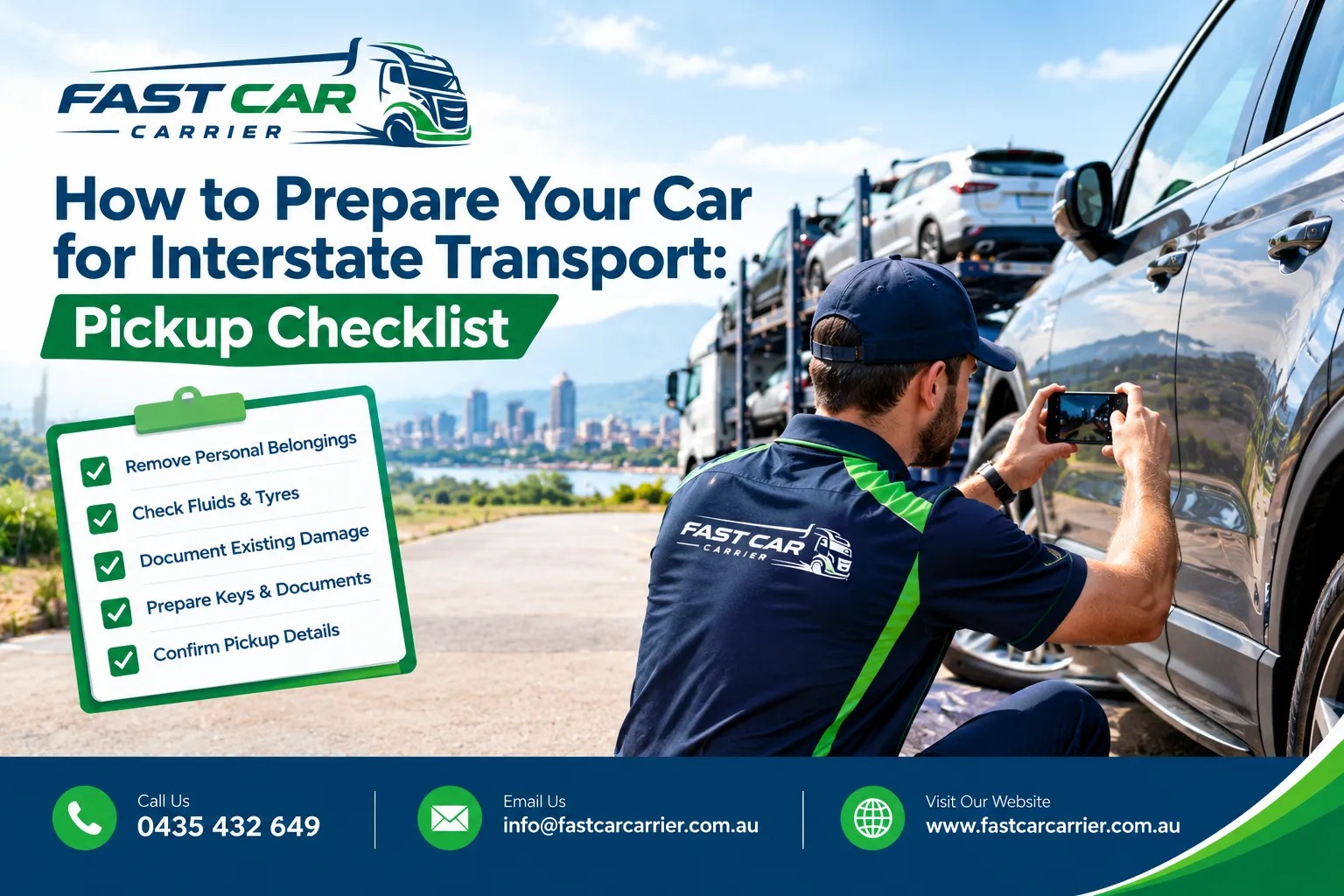
How Dealers Should Prepare Vehicles for Transport
A quick check before pickup avoids disputes later.
- Remove personal items and loose accessories
- Check and record the vehicle's condition
- Document existing damage
- Take dated photos from every side
- Check the tyres
- Confirm whether the vehicle runs
- Have the keys ready
- Secure anything loose
- Note any modifications
- Confirm the vehicle details
- Keep paperwork available where required
For a longer list, see how to prepare vehicles for interstate transport.
Non-Running and Damaged Dealer Vehicles
Dealers sometimes need to move damaged stock, auction buys, project vehicles, or cars that will not start. These need extra care.
The provider needs accurate information before pickup, including:
- Whether the vehicle steers and brakes
- Whether any tyres are flat
- Any accident damage
- How easy it is to reach
- Whether special loading equipment may be needed
Not every non-running vehicle can automatically be transported. Be upfront, and confirm it in writing before the carrier arrives.
Dealer-to-Dealer Vehicle Transport
This is one of the most common jobs. A vehicle sits at one dealership, and a buyer, or a better market, is at another.
Key points:
- Stock balancing: Move vehicles to where they are most likely to sell.
- Interstate transfers: Confirm the vehicle is ready before the booking is locked in.
- Delivery scheduling: The receiving yard should know when to expect the vehicle.
- Multiple locations: Several transfers may run on the same route.
Clear communication between the sending and receiving dealerships is critical. Both sites need the same details: vehicle information, contact person, access times and the expected timeframe. A missed handover is a common source of delay.
Auction Vehicle Transport for Dealers
After buying through an auction or wholesale channel, you usually need to move the vehicle quickly. Think through:
- Vehicle location: Confirm exactly where it is held.
- Condition: Check the listing, and note any damage.
- Pickup access: Find out how collection works at that site.
- Collection requirements: Auction sites often have their own release rules, so confirm them.
- Running status: Tell the provider if the vehicle does not run.
- Delivery: Confirm where it is going and who will receive it.
- Scheduling: Many sites have limits on how long a vehicle can be stored.
Sort out the transport plan as soon as the purchase is confirmed, not after.
Fleet Relocation for Dealer Groups
Dealer groups face a bigger version of the same job. Vehicles may need to move between many branches at once.
This can involve:
- Multiple dealerships
- Multiple pickup and delivery points
- Regular stock balancing
- Centralised scheduling, so one person owns the plan
- Regular communication between branches and the transport provider
- Vehicle updates, where the provider offers them
Ask your provider what updates they can give you during transit. Do not assume a specific tracking system exists.