How to Prepare Your Car for Interstate Transport: Checklist
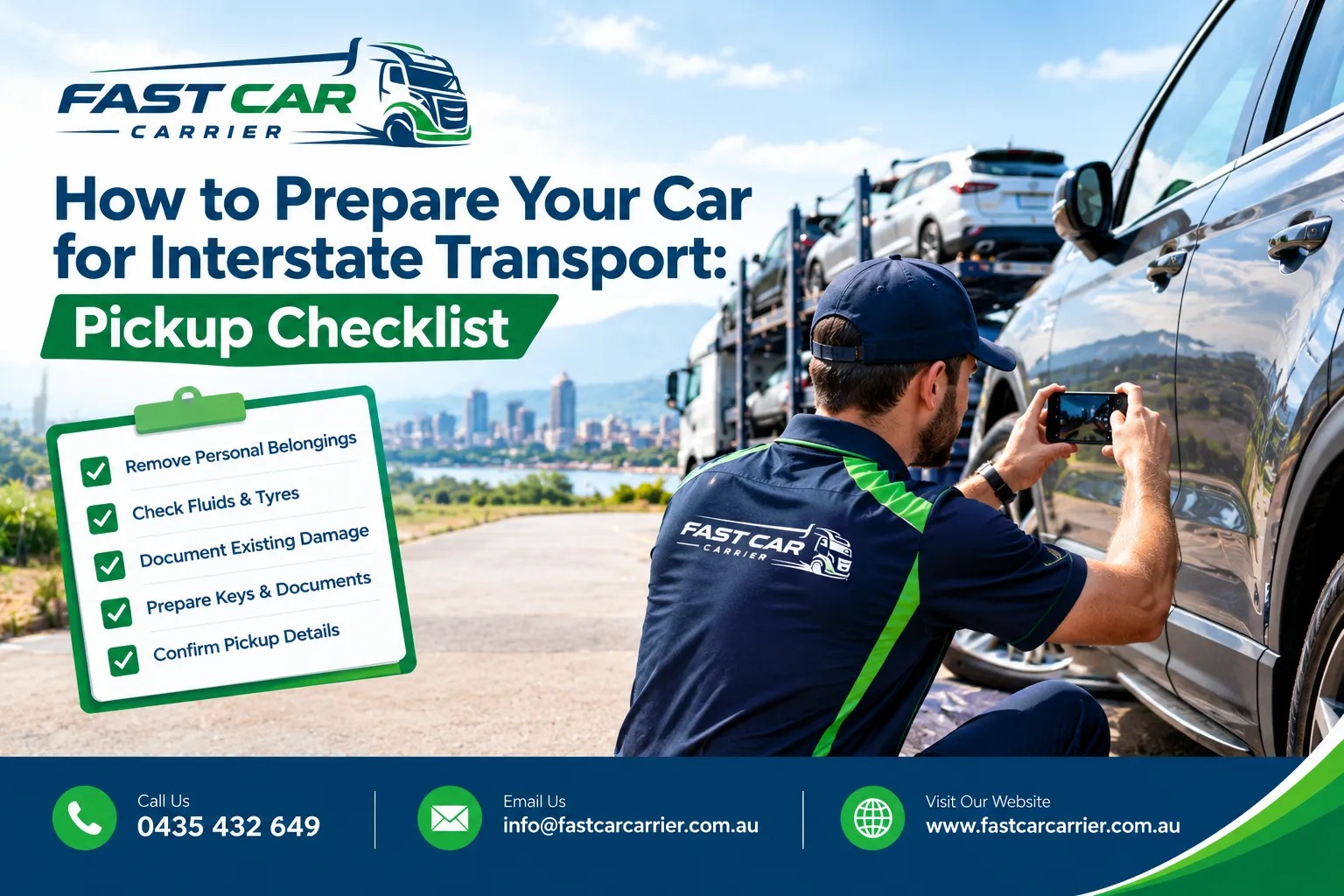
15-Oct-2026How to Prepare Your Car for Interstate Transport: Pickup Checklist
Knowing how to prepare your car for interstate transport takes the stress out of pickup day. A little work beforehand saves time, avoids delays and gives you a clear record of your car's condition.
Good preparation helps in a few simple ways:
• Pickup is quicker and easier for the driver.
• You have a record of your car's condition before it leaves.
• Existing damage is easier to spot and note.
• Fewer surprises mean fewer delays.
• You and the carrier can communicate clearly.
If you are still weighing up your options, it can help to read about interstate car transport vs driving first. If you have already booked, this guide gives you a simple pickup checklist you can save and follow.
One note before we start. Some preparation steps vary between carriers. Where that is the case, we say so. Always confirm the details with your transport provider.
Quick Interstate Car Transport Pickup Checklist
Here is the short version. Each point is explained in the sections below.
☐ Remove personal belongings
☐ Clean the car enough for a proper inspection
☐ Check the fuel level against your carrier's instructions
☐ Check your tyres
☐ Look for fluid leaks
☐ Photograph the whole vehicle
☐ Note and photograph existing damage
☐ Remove or secure loose items and accessories
☐ Prepare your keys
☐ Confirm pickup and delivery details
☐ Tell the carrier about the car's condition
☐ Confirm whether the car is running or non-running
Remove Personal Belongings From the Vehicle
A car carrier moves vehicles, not household goods. Loose items can shift, get damaged or go missing. They can also make the pickup inspection harder.
Go through the whole car and check:
• The glovebox, console and door pockets
• Under the seats and in the footwells
• The boot, including the spare wheel well
• Shelves, hooks and cup holders
Pay extra attention to valuables, electronics, documents and anything heavy. Loose heavy objects can slide around and cause damage.
Rules on belongings can differ between carriers. Some may allow a small amount of items and others may not. Ask your transport provider what applies to your booking before pickup day.
Clean Your Car Before Pickup
You do not need a showroom shine. The point of a basic clean is simple. A reasonably clean exterior makes scratches, dents and chips easier to see when the car is inspected.
A wash a day or two before pickup is plenty. Check these areas as you go:
• Wheels and bumpers
• Mirrors and windscreen
• Roof, bonnet and boot
• All doors
A tidy interior is a bonus. It also helps you spot anything you have forgotten to remove.
Document Existing Vehicle Damage
This is one of the most important steps. A clear record of your car's condition before pickup gives you and the carrier a shared starting point.
Do this in good daylight if you can:
Area | What to photograph |
All four sides | Front, rear, driver side and passenger side |
Each corner | Close angles that show bumper and panel edges |
Wheels and bumpers | Scuffs on alloys, bumper scrapes and cracks |
Existing damage | Close-ups of every scratch, dent and chip |
Windscreen and mirrors | Chips, cracks and mirror condition |
Roof and odometer | Roof surface and the current kilometre reading |
Keep the photos together with your booking records. Dated photos give you a useful record of how the car looked before transport. Make sure your phone's date and time are correct. Back the photos up somewhere safe, not just on your phone.
Also write down any damage you already know about. Mention it to the carrier at pickup so it can be noted on the vehicle's condition report.
Check the Vehicle's Mechanical Condition
You are not doing a full service. You are simply making sure you know the car's condition, so you can tell the carrier about it. Keep it safe and simple.
• Battery: Does the car start without trouble?
• Warning lights: Note any that show on the dash.
• Brakes: Do they feel normal when you drive?
• Leaks: Look under the car for fresh drips or wet patches.
• General running: Note any odd noises, stalling or rough idling.
If something is wrong, do not try risky fixes at home. Take the car to a mechanic if needed. Otherwise, just tell the carrier about the issue. Disclosing known mechanical problems early helps the carrier plan properly.
Running vs Non-Running Vehicles
The carrier needs to know if your car can:
Can the car... | Why the carrier needs to know |
Start | Affects how it is positioned and loaded |
Move under its own power | Decides if loading equipment is needed |
Steer | Steering problems limit how the car can be manoeuvred |
Brake | Brake issues affect safe loading and unloading |
This affects how the car is loaded. A non-running or damaged vehicle may need special loading equipment and extra planning. It may not be as simple as driving the car onto the carrier.
Give accurate details before you book, not on pickup day. Surprises at the kerb can cause delays or a change of plan. If you are unsure how the booking might be affected, the vehicle transport shipping price breakdown explains what can influence a quote.
Check Tyres, Windows, Mirrors and Accessories
Walk around the car and check:
☐ Tyres: Look for obvious wear, bulges or flat spots.
☐ Tyre pressure: Make sure the tyres are not visibly flat or underinflated.
☐ Mirrors: Check they are secure and fold in if they can.
☐ Windows: Close them fully and check the seals.
☐ Antenna: Retract it or remove it if it unscrews.
☐ Roof racks, spoilers and bars: Check they are firmly attached.
☐ Removable accessories: Look at bike racks, tow bars and similar fittings.
☐ Loose external parts: Tape or secure anything that is hanging or rattling.
Fragile or removable accessories may need special attention. That does not mean everything must come off. Ask your carrier which items they want removed and which can stay.
Check Fuel and Fluids
Follow your carrier's instructions on fuel level. Requirements can differ, so confirm them with the transport provider rather than guessing. Fast Car Carrier can tell you what applies to your booking.
Ask whether you need to avoid a full tank or an empty one. Either way, do not turn up with the fuel warning light on. Also look for any visible leaks, and report any mechanical or fluid issues so they can be factored in.
Prepare the Keys and Vehicle Documents
Have these ready before the driver arrives:
• The main vehicle key (and a spare if the carrier asks for one)
• Your booking confirmation
• Your contact details, and those of anyone collecting or receiving the car
• Pickup and delivery addresses
• Any transport paperwork the carrier has sent you
The exact paperwork can differ between providers. Check with the carrier what they need from you rather than assuming.
Check Alarms and Electronic Devices
A car alarm that goes off during transport can cause problems for the driver and other vehicles on the load. Follow your vehicle manufacturer's instructions for turning off or limiting the alarm or immobiliser. Then check the carrier's requirements.
Also remove or switch off any removable electronics. That includes dash cams, toll tags, phone mounts and GPS units. If you are not sure how to disable something on your car, check the owner's manual or ask the carrier.
Check Pickup Access
A car carrier is a large vehicle. It needs a safe, accessible spot to stop and load. Think about your pickup location before the day.
Problem spot | Why it matters | What to do |
Narrow streets and tight driveways | A large carrier may not fit | Suggest a wider nearby meeting point |
Low bridges and overhanging trees | Height limits can block access | Mention them when booking |
Parking restrictions and busy roads | The carrier needs a safe place to stop | Check signs and timing |
Apartment buildings | Limited kerb space | Ask about a nearby loading spot |
Regional or restricted-access properties | Access may be difficult | Discuss options with the carrier early |
If your street is tricky, say so when you book. You may be asked to bring the car to a nearby, easier meeting point. That is a common and practical solution. To see how pickup and delivery fit together, read about how door-to-door car transport works.
What to Expect on Pickup Day
The process is usually straightforward. Here is how it typically runs:
1. Confirm the pickup time or window. Check it with the carrier before the day.
2. Make sure the car is accessible. Clear the space around it and move any parked cars if you can.
3. Hand over the required keys.
4. The vehicle's condition is checked. Walk around the car with the driver if you are there.
5. Existing damage is documented. Point out anything you have already noted.
6. The car is prepared for loading.
7. The car is loaded onto the carrier.
8. Transport begins.
Pickup and delivery times are estimates. They can change because of scheduling, traffic, weather and road conditions. Do not plan your day around a fixed minute. For a sense of timeframes, see how long interstate car transport takes.
What Not to Leave in Your Car
When in doubt, take it out. Remove these before pickup:
• Cash and cards
• Passports, licences and personal documents
• Jewellery
• Laptops, tablets and phones
• Important paperwork
• Other valuable personal items
• Loose heavy objects, such as tools or sports gear
The main reasons are safety and security. Valuables are best kept with you. Loose items can move around and cause damage.
Preparing a Classic, Luxury or Modified Vehicle
Special vehicles can need extra preparation and care. Tell the carrier about anything unusual before pickup. This includes:
• Low ground clearance
• Modified or lowered suspension
• Wide body kits and large spoilers
• Custom wheels
• Classic or hard-to-replace components
• Delicate luxury finishes
• Anything that may need special loading
If you are not sure whether a feature matters, mention it anyway. It is easier for the carrier to plan when they know about it early. Clear photos of low or wide areas can help too.
Preparing a Non-Running or Damaged Vehicle
Give the carrier accurate details about:
• Mechanical failure
• Accident damage
• Flat tyres
• Steering problems
• Brake problems
• Missing wheels
• Anything else that could limit loading
Special equipment may be required. Whether a vehicle can be transported depends on its condition and the carrier's equipment. Not every damaged vehicle can be accepted, so check before you book and before pickup day.
Interstate Car Transport Checklist: 24 Hours Before Pickup
Save this section and tick it off the day before.
☐ Remove personal belongings
☐ Photograph the vehicle
☐ Check and note existing damage
☐ Confirm pickup details
☐ Confirm delivery details
☐ Check your keys
☐ Check the vehicle's condition
☐ Tell the carrier about any changes
☐ Confirm access to the pickup location
☐ Keep your booking information handy
Common Car Transport Preparation Mistakes
Most problems come from a handful of avoidable slips:
Mistake | Why it causes problems | Better approach |
Leaving valuables inside | They can be lost or damaged | Remove them before pickup |
Not photographing the car | No record of its condition | Take dated photos |
Not disclosing damage | Confusion at inspection | Tell the carrier upfront |
Not saying the car does not run | Wrong equipment or plan | Give accurate details when booking |
Ignoring pickup access | Delays or a changed meeting point | Check the street beforehand |
Forgetting the keys | The car cannot be moved | Keep them with your booking papers |
Incorrect vehicle details | Planning errors | Double-check make, model and condition |
Assuming times are guaranteed | Times are estimates | Stay flexible on the day |
Preparing last minute | Rushed, missed steps | Start 2-3 days ahead |
Preparation is only half the job. Choosing the right provider matters too. See common mistakes when choosing interstate car transport for what to watch out for. For the wider picture, read everything you need to know before shipping your car.
Open vs Enclosed Transport
The transport method you pick can affect how you prepare. Open transport carries the car exposed on the carrier. Enclosed transport places it in a covered space.
Factor | Open transport | Enclosed transport |
Exposure | Car is exposed on the carrier | Car is in a covered space |
Best suited to | Everyday vehicles | Classic, luxury, low or high-value cars |
Preparation focus | Secure loose parts and accessories | Same, plus tell the carrier about delicate finishes |
Cars that may benefit from extra protection include classic, luxury, low or high-value vehicles. Whichever you choose, tell the carrier about your vehicle's condition and any special features. To compare the two, read open vs enclosed car transport.
Frequently Asked Questions
What should I remove from my car before interstate transport?
Remove valuables, electronics, documents and loose items. Check the boot, glovebox, door pockets and under the seats. Ask your carrier what applies to your booking.
Should I clean my car before transport?
A basic wash helps. It makes existing scratches and dents easier to see during inspection. It does not need to be perfect.
Should I take photos before my car is picked up?
Yes. Photograph all sides, each corner, the wheels, bumpers, windscreen, mirrors and any existing damage. Keep the photos with your booking records.
How much fuel should I leave in my car?
Follow your carrier's instructions. Fuel requirements can vary, so confirm with Fast Car Carrier before pickup.
Can I transport a car that does not run?
Often this is possible, but it depends on the vehicle and the carrier's equipment. Tell the carrier before booking so they can plan the loading.
Do I need to provide the car keys?
The driver will usually need a way to move the vehicle, so have your keys ready. Confirm with the carrier whether a spare is needed.
What happens during vehicle pickup?
The time is confirmed, the car is inspected, keys are handed over, existing damage is noted, and the car is loaded onto the carrier.
Can I leave personal belongings in my car?
This varies between carriers. The safest approach is to remove everything and ask your provider before leaving anything inside.
What should I do if my car has existing damage?
Photograph it and tell the carrier. Make sure it is noted at pickup.
Can modified or luxury cars be transported interstate?
Often yes, but they may need extra care or special loading. Tell the carrier about any modifications, low clearance or delicate finishes early.
Ready to Book Your Interstate Car Transport?
Once your car is prepared, pickup day is simple. If you have questions about getting ready, or you would like a quote based on your vehicle and route, contact the team at Fast Car Carrier.
Fast Car Carrier
Phone: 0435 432 649
Email: info@fastcarcarrier.com.au
Website: https://www.fastcarcarrier.com.au/