Cost to Ship a Car Enclosed | Full Price Breakdown
09-Sep-2026If you're researching how much does it cost to ship a car enclosed, you already know enclosed transport isn't the cheapest option on the market. It's a premium service, and it comes with a higher price tag than standard open transport. But for many vehicle owners, that extra cost buys real peace of mind.
People choose enclosed transport when a car needs more protection than an open carrier can offer. Classic cars, luxury vehicles, and low-clearance models all fall into this category. The exact price depends on your vehicle, your route, and how quickly you need it delivered. Before we get into the numbers, it helps to understand what's actually driving the enclosed car transport cost up.
How Much Does It Cost to Ship a Car Enclosed?
There's no single fixed price for enclosed car shipping in Australia. Costs shift depending on distance, vehicle size, carrier availability, and the level of handling your car needs. Anyone quoting a flat, universal price without asking about your vehicle or route isn't giving you an accurate figure.
Generally, enclosed transport costs more than open transport for the same trip. The gap between the two can vary a lot depending on how far your car is travelling and how in-demand enclosed carriers are on that route at the time.
The most reliable way to understand your enclosed car transport cost is a personalized quote. A provider who reviews your pickup location, destination, and vehicle details will give you a far more accurate estimate than any generic price list. This is also why comparing open and enclosed car transport side by side, based on your specific circumstances, matters more than chasing an advertised "from" price.
What Is Enclosed Car Transport?
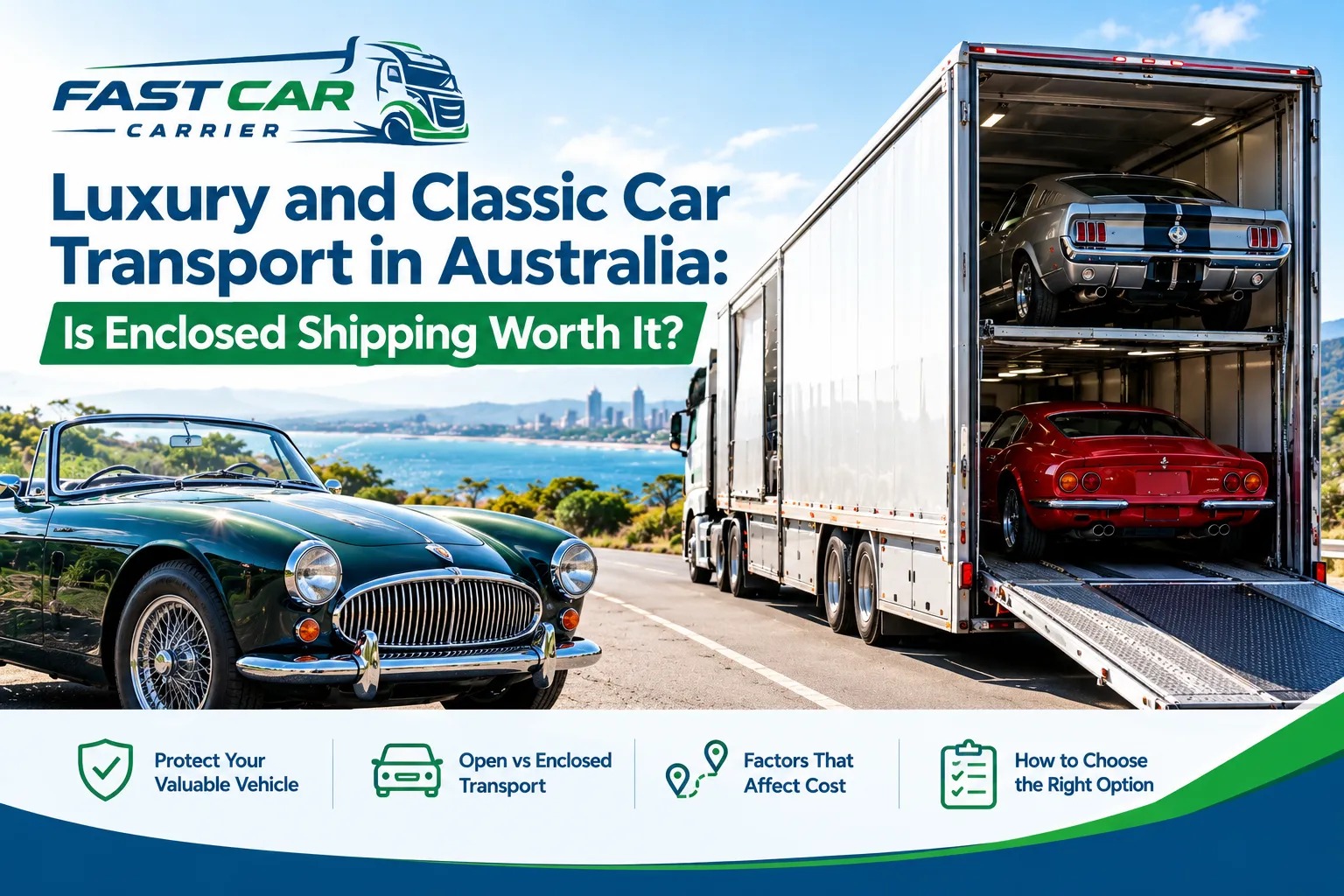
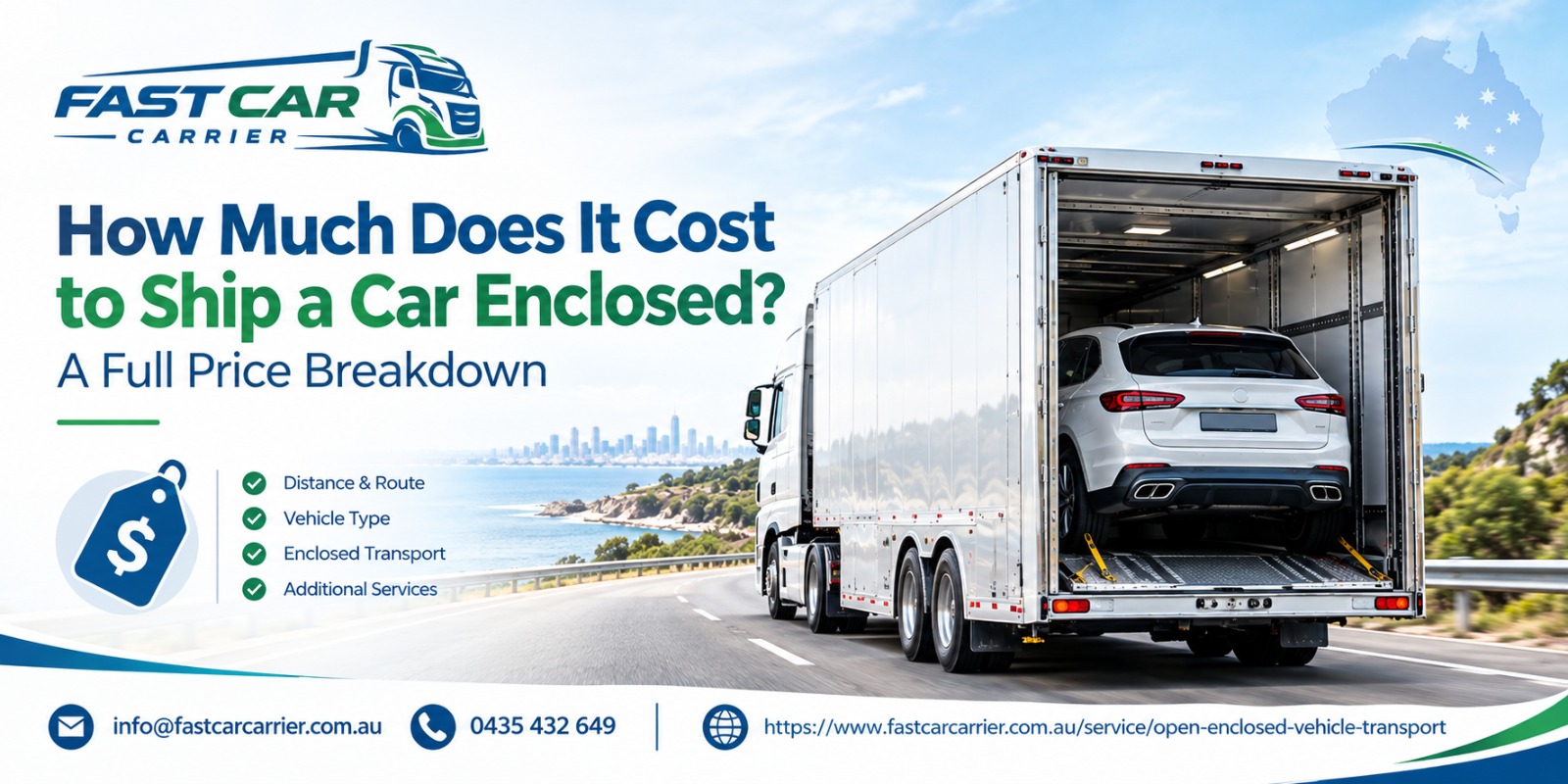
Enclosed car transport means your vehicle travels inside a fully covered carrier rather than on an open trailer. The car is shielded on all sides, protecting it from rain, wind, dust, stone chips, and general road debris throughout the journey.
This setup is popular for vehicles where even minor cosmetic damage would be a significant loss. Think classic cars, luxury vehicles, prestige models, and modified cars with custom paintwork or aftermarket parts. Enclosed carriers also tend to offer more careful loading and securing procedures, which suits vehicles with limited ground clearance or unusual dimensions.
Fast Car Carrier offers enclosed transport as part of its broader vehicle transport services across Australia, alongside open transport for owners who don't need the extra protection.
A Quick Note on Cost So Far
Before we go further, it's worth remembering this simple rule: more protection generally means more cost. That's true across the transport industry, not just with one provider. Keep this in mind as we break down exactly where the extra expense comes from.
Why Does Enclosed Car Transport Cost More?
Several factors combine to make enclosed transport pricier than open transport:
- Specialised carriers: Enclosed trailers are purpose-built and cost more to buy, run, and maintain than standard open trailers.
- Lower vehicle capacity: Enclosed trailers typically carry fewer vehicles per trip, so the cost per car is higher.
- Extra protection and handling: Careful loading, tie-down procedures, and covered transit all add time and labor.
- Route availability: Enclosed carriers are less common on some routes, which can push prices up when demand outstrips supply.
- Fuel and operating costs: Larger, heavier enclosed trailers often use more fuel over long interstate distances.
- Vehicle size and weight: Bigger or heavier vehicles need more space and can limit how many other cars share the trailer.
- Loading and unloading requirements: Low-clearance or modified vehicles sometimes need ramps or extra equipment.
- Distance and route: Longer trips and less common routes generally cost more, regardless of transport type.
- Seasonal demand: Enclosed transport bookings can spike around car shows, auctions, and peak moving periods.
What Factors Affect Your Enclosed Car Transport Cost?
Every quote is built around a combination of details specific to your booking:
- Pickup location: Metro areas are usually easier and cheaper to service than remote addresses.
- Delivery location: The same applies at the destination end.
- Transport distance: Interstate trips cost more than short local moves, though the cost per kilometer often drops on longer routes. Our interstate car transport cost guide breaks this down in more detail if you're comparing routes.
- Vehicle make, model, and size Larger vehicles take up more trailer space.
- Vehicle condition. A vehicle that starts and drives normally is usually simpler to load than one that doesn't.
- Running vs non-running vehicle: Non-running vehicles need winches or additional equipment, which can add to the cost. If your car doesn't start, ask about non-running car transport options before booking.
- Enclosed vs open transport: Enclosed transport carries the premium we've already covered.
- Delivery options: Choosing door-to-depot car transport instead of full door-to-door delivery can sometimes reduce costs, depending on your location.
- Timing and urgency: Rushed bookings limit carrier options and can raise the price.
- Special handling requirements: Modified suspension, wide body kits, or unusual dimensions may need extra care.
For a broader look at how these variables interact across all transport types, our vehicle transport and shipping price breakdown guide covers the full picture in more detail.
Thinking about your own vehicle's requirements? Get in touch with Fast Car Carrier for a quote based on your car, your route, and your timeline.
Enclosed vs Open Car Transport: Which Costs More?
Factor | Open Transport | Enclosed Transport |
Protection | Basic, exposed to elements | Full weather and debris protection |
Weather exposure | Yes | None |
Carrier capacity | Higher (more vehicles per load) | Lower (fewer vehicles per load) |
Typical cost level | Lower | Higher |
Availability | Widely available | Less common, especially in remote areas |
Best-suited vehicles | Every day, standard vehicles | Classic, luxury, prestige, modified vehicles |
Security/privacy | Visible during transit | Fully covered and less visible |
Ideal customer | Budget-conscious owners with standard cars | Owners prioritising protection over price |
As the table shows, open transport is generally the more economical choice for everyday vehicles. Enclosed transport earns its higher price through added protection and careful handling. For a deeper comparison of how these two services stack up in practice, see our full open vs enclosed car transport guide.
When Is Enclosed Car Transport Worth the Extra Cost?
Enclosed transport tends to make the most sense for:
- Classic cars
- Luxury vehicles
- Prestige vehicles
- Collectible cars
- Modified vehicles
- Low-clearance vehicles
- Cars with valuable or hard-to-replace paintwork and finishes
- Vehicles with strong sentimental value
If your car falls into one of these categories, the extra cost often reflects genuine risk reduction rather than an unnecessary upgrade.
On the other hand, a standard daily-driver vehicle in good condition usually does perfectly well with open transport. There's no need to pay a premium if your car doesn't need the extra layer of protection.
What Is Usually Included in an Enclosed Car Transport Quote?
Most enclosed transport quotes cover:
- Vehicle pickup
- Loading onto the enclosed carrier
- Transport to the destination
- Unloading
- Delivery
- Standard handling during transit
- Transport cover, where applicable
Inclusions vary between providers, so it's worth confirming exactly what's covered before you book. A clear breakdown upfront avoids surprises later.
What Can Increase the Cost of Enclosed Car Shipping?
A few situations commonly push the price higher:
- Remote pickup or delivery locations
- Large SUVs, 4WDs, or vans
- Non-running vehicles requiring extra equipment
- Modified vehicles with non-standard dimensions
- Difficult property access for loading
- Urgent or rushed transport timelines
- Additional handling requests
- Last-minute route changes
- Peak seasonal demand
If timing is critical, ask your provider about express car transport options, which can sometimes be arranged alongside enclosed service for an additional fee.
How to Get an Accurate Enclosed Car Transport Quote
Follow these steps to get a quote that reflects your actual situation, not a generic estimate:
1. Provide your pickup and delivery locations.
2. Share your vehicle's make, model, and year.
3. Let the provider know if the vehicle is running or not.
4. Mention any modifications or special handling needs.
5. Confirm that you need enclosed transport specifically.
6. Ask exactly what's included in the quoted price.
7. Check the transport cover and relevant terms.
8. Compare quotes on inclusions, not price alone.
Ready for an accurate quote? Contact Fast Car Carrier with your vehicle and route details, and we'll put together a tailored price based on what you actually need.
Is Enclosed Transport Better Than Open Transport?
Neither option is universally "better." The right choice depends on your vehicle's value, its condition, how much protection it needs, your budget, and the route you're booking.
If your car is valuable, rare, or sensitive to weather and road debris, enclosed transport is usually worth considering. If you're moving a standard vehicle on a budget, open transport remains a reliable and cost-effective choice. The best decision comes down to matching the service to your specific vehicle and priorities.
Frequently Asked Questions
How much does it cost to ship a car enclosed?
There's no fixed universal price. Costs depend on distance, vehicle size, route availability, and timing. A personalized quote based on your specific pickup, delivery, and vehicle details gives the most accurate figure.
Is enclosed car transport more expensive than open transport?
Generally, yes. Enclosed transport uses specialized carriers with lower vehicle capacity and extra handling requirements, which typically makes it pricier than standard open transport for the same route.
Why does enclosed car transport cost more?
Enclosed carriers cost more to run, carry fewer vehicles per trip, and require extra care during loading and transit. These combined factors push the overall price above standard open transport.
Is enclosed transport worth it for a classic car?
Often, yes. Classic cars usually have paintwork, trim, or parts that are expensive or impossible to replace. The added protection from weather and debris can be well worth the extra cost.
Can SUVs and 4WDs be transported in an enclosed carrier?
Yes, though their larger size may affect pricing and available space on the trailer. It's best to confirm dimensions with your provider when requesting a quote.
Does vehicle size affect enclosed car transport cost?
Yes. Larger and heavier vehicles take up more trailer space, which can reduce how many other cars fit on the same load and affect the overall price.
Does enclosed transport protect a car from weather and road debris?
Yes. The covered design shields your vehicle from rain, wind, dust, and stone chips throughout the journey, which is the main reason owners choose this service.
How can I get an accurate enclosed car transport quote?
Share your pickup and delivery locations, vehicle details, and any special requirements with your provider. A tailored quote based on this information will be far more accurate than a generic estimate.
Get Your Enclosed Car Transport Quote Today
Every enclosed car transport job is different, and the only way to know your real cost is to get a quote built around your vehicle, route, and timeline. Fast Car Carrier can walk you through your options and put together a tailored price with no guesswork.
Phone: 0435 432 649 Email: info@fastcarcarrier.com.au Website: fastcarcarrier.com.au