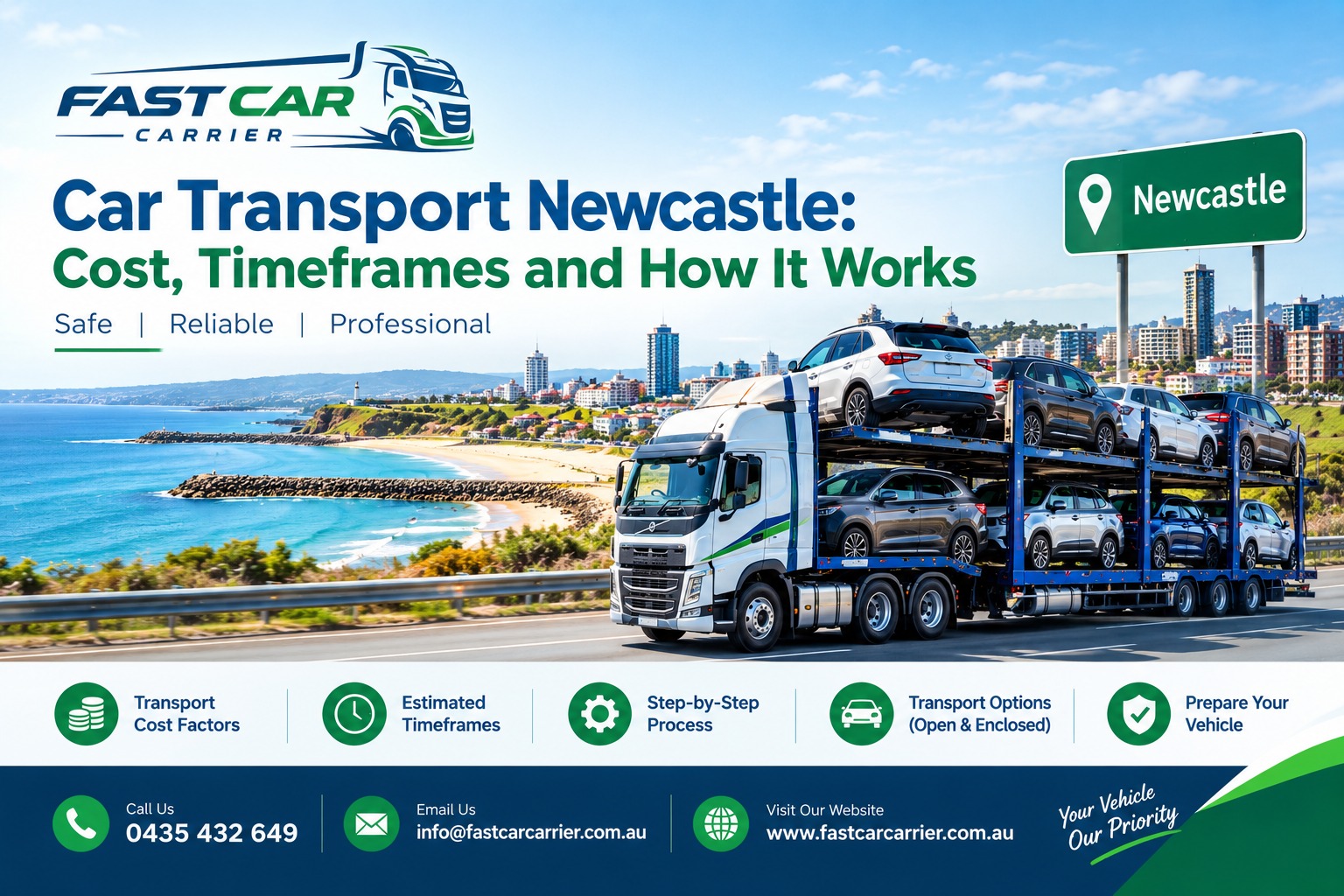
Car Transport Newcastle: Cost, Timeframes & Process
05-Oct-2026Car Transport Newcastle: Cost, Timeframes, and How It Works
Maybe you are moving to Newcastle for work. Maybe you have bought a car from a seller in Newcastle, or you are selling one to a buyer in another state. Or you simply do not want to drive hundreds of kilometers to get a vehicle where it needs to be.
In all of these cases, professional car transport can help. The vehicle is moved on a carrier truck, so it does not pick up extra kilometers, wear, or road risk along the way.
This guide explains how car transport Newcastle bookings work. It covers cost, timeframes, transport options, the booking process, vehicle preparation, and a few Newcastle-specific points to keep in mind. You will also find route notes for Sydney, Melbourne, and Brisbane.
What Is Car Transport in Newcastle?
Car transport means moving a vehicle from one location to another without driving it yourself. A specialist company collects the car, secures it on a purpose-built carrier, and delivers it to the agreed destination.
Newcastle is one of the major cities in New South Wales. People and businesses regularly move vehicles to and from the area for relocations, sales, purchases, and dealership transfers.
There are three common ways to move a car over a long distance.
Driving it yourself
● You control the timing.
● You pay for fuel, accommodation, food, and your time.
● The car adds kilometers and faces road wear and weather.
A car courier or drive-away service
● A driver is engaged to drive your car to the destination.
● The car is still being driven on the road.
● Kilometers are added, and the arrangement is different from carrier transport.
A professional car carrier
● Your car is loaded onto a truck and carried to the destination.
● It is not driven for the main journey.
● It suits long trips, valuable vehicles, and non-running cars.
If you are weighing the first two options against carrier transport, this guide on car couriers vs car carriers explains the differences in more detail.
How Does Car Transport to or From Newcastle Work?
The process is fairly simple once you know the steps. Here is how it usually runs.
1. Request a quote. Contact the transport company and tell them what you need moved.
2. Provide vehicle and route details. Share the pickup and delivery locations, plus the vehicle details.
3. Confirm the booking. Once you accept the quote, the job is booked and scheduled according to carrier availability.
4. Arrange pickup. The carrier or dispatcher confirms a pickup window and contact details with you.
5. Vehicle condition inspection. The vehicle is checked, and any existing marks are recorded before loading.
6. Loading and securing. The vehicle is loaded onto the carrier and fastened for the journey.
7. Interstate transit. The truck travels the route. Other vehicles may be on the same carrier, so the trip may include other stops.
8. Delivery and final inspection. The vehicle is unloaded at the destination. You check it against the earlier condition notes.
Each step depends on the one before it. A clear quote request and accurate details at the start make everything after it smoother. For a wider overview, see what to know before shipping your car.
How Much Does Car Transport Newcastle Cost?
There is no single price for car transport in Newcastle. The cost depends on the specific job, so any fixed number you see without route and vehicle details should be treated with caution.
A Newcastle to Sydney job is not priced like a Newcastle to Perth job. A small hatchback is not priced like a large 4WD. The table below shows the main factors.
Cost Factor | How It Can Affect the Quote |
Distance | Longer routes generally cost more because of more fuel, driver time, and truck time. |
Vehicle size | Larger and heavier vehicles take up more space and weight capacity on the carrier. |
Vehicle condition | A non-running vehicle may need a winch or special loading, which can add cost. |
Pickup location | Easy truck access is simpler. Hard-to-reach streets or areas may add time and cost. |
Delivery location | Metro delivery is usually easier to plan than regional or remote delivery. |
Transport type | Open and enclosed transport are priced differently. |
Door-to-door service | Convenience may affect the quote compared with an agreed depot or meeting point. |
Enclosed transport | Extra protection generally costs more than open transport. |
Urgent bookings | Faster or priority scheduling may increase the price. |
Remote locations | Extra distance off the main route can add to the cost. |
Special loading requirements | Modified, lowered, or oversized vehicles may need extra care or equipment. |
When you compare quotes, look at what is included, not only the headline price. Check these points:
● Is pickup and delivery door-to-door or to a depot?
● Is the vehicle transported open or enclosed?
● Is insurance coverage explained clearly?
● Are there extra charges for access, waiting, or non-running vehicles?
● What pickup and delivery timeframe is estimated?
For a deeper look at how pricing is built, read the vehicle transport and shipping price breakdown. The interstate car transport cost guide covers broader costs across Australia.
What Is the Typical Car Transport Timeframe From Newcastle?
No carrier can honestly promise one fixed timeframe for every Newcastle booking. Timing depends on the route, the carrier schedule, and a few outside factors. Any figure you are given should be an estimated timeframe, not a guarantee.
It helps to separate the stages of the job, because transit time is not the same as the total time from booking to delivery.
● Booking and carrier availability. After you book, the job has to fit a carrier running your route.
● Pickup scheduling. A pickup window is arranged based on the carrier's schedule and your availability.
● Vehicle collection. The vehicle is inspected, loaded, and secured.
● Transit time. This is the time the truck spends on the road. It is often the part people focus on.
● Final delivery. The vehicle is unloaded and checked at the destination.
Someone might hear that transit takes a certain number of days and assume the car will arrive that many days after booking. In practice, the wait for a carrier and pickup can come first.
Several things can shift timing:
● Carrier availability. Fewer trucks on a route can mean a longer wait.
● Route and distance. Longer interstate routes take more days on the road.
● Metro versus regional locations. Metro routes can be easier to schedule. Regional or remote pickup and delivery may need extra planning.
● Weather and road conditions. Storms, flooding, and road closures can slow a truck down.
● Traffic. Heavy traffic around major cities can add time.
● Seasonal demand. Busy periods can tighten carrier space.
● Vehicle type. Oversized, modified, or non-running vehicles may need special handling.
For more on how long journeys usually run, see this guide to interstate car transport timeframes.
Newcastle to Sydney Car Transport
Newcastle and Sydney are both in New South Wales, and vehicles move between them for many reasons. This is a shorter route than most interstate jobs, but a carrier is still often the more practical choice.
Common situations include:
● Moving home. You may be relocating and want to avoid a second driver or a second trip.
● Buying or selling a vehicle. A buyer in Sydney may purchase a car from a seller in Newcastle, or the other way around.
● Work relocation. You might need your car at the new location while you sort out the move.
● Family vehicle movement. A relative may need a car delivered without making the drive.
● Dealership vehicle movement. Dealers may move stock between locations.
Pickup and delivery access matters most on this route. Sydney has dense streets and limited truck access in some suburbs. Telling the carrier your exact suburb and street type early helps them plan.
Prices vary by vehicle and suburb, so request a quote for your exact route.
Newcastle to Melbourne Car Transport
Newcastle to Melbourne is a long interstate route. That changes how you plan the job. Here are the main things to think about.
● Longer distance. More kilometers mean more days on the road and a higher chance of schedule changes.
● Carrier scheduling. The truck may follow a set route with several pickups and drop-offs, so your date depends on where you fit in.
● Vehicle preparation. A longer trip is a good reason to be thorough. Clear the car out, photograph it and note any existing marks.
● Door-to-door options. This is often possible in metro areas. Regional addresses may need an alternative meeting point.
● Open or enclosed transport. Open transport suits many everyday cars. Enclosed may suit a classic, prestigious, or highly valued car.
● Estimated delivery timing. Treat any delivery date as an estimate. Weather, road conditions, and other jobs on the same truck can all move it.
If you are flexible with dates, tell the carrier. It can make scheduling easier on a long route like this one.
Newcastle to Brisbane Car Transport
Moving a vehicle between Newcastle and Brisbane involves a good deal of route planning, but the booking works the same way as any other interstate job.
Focus on these areas:
● Route planning. Ask which route the carrier will use and how pickups and drop-offs are arranged.
● Pickup location. Give a clear address and say how easy it is for a large truck to reach. A narrow street, steep driveway, or low trees can all matter.
● Vehicle condition. State whether the car runs, drives, and steers normally. If it does not, say so at the quote stage.
● Delivery requirements. Let the carrier know who will receive the vehicle, where it should be left, and whether the address is suitable for a truck.
If the delivery address is hard to reach, the carrier may suggest a nearby meeting point such as a large car park. Agree on this before the day, not on it.
Door-to-Door Car Transport in Newcastle
Door-to-door transport means the carrier collects the vehicle from your chosen location and delivers it to your chosen destination. It is a popular option because you do not have to take the car to a depot.
Typical pickup and delivery points include:
● A home
● A workplace
● A dealership or seller's yard
● Another agreed location that is easy to reach
Truck access is the key point. Car carriers are large vehicles. They need room to enter the street, stop safely, and load the car. If the carrier cannot get to a specific address safely, door-to-door may not be possible at that exact spot.
In that case, an alternative meeting point can sometimes be arranged. This might be a nearby wide street, a shopping center car park, or an industrial area. The carrier will tell you what is suitable.
Learn more about how door-to-door car transport works, including what to expect on pickup and delivery day.
Open vs Enclosed Car Transport
You will usually be asked whether you want open or enclosed transport. Both are valid. The right choice depends on your vehicle and budget.
Open transport
● It is the most common option.
● It suits many everyday vehicles.
● It is usually more cost-effective.
● The car is exposed to the weather and road environment, as it would be when driven.
Enclosed transport
● The vehicle is inside a covered trailer or container.
● It gives extra protection from weather and road debris.
● It is useful for classic, luxury, prestige, or modified vehicles.
● It generally costs more.
If your car is a daily driver, open transport is often enough. If it is rare, valuable, or sensitive to the elements, enclosed is worth considering. This guide to open and enclosed car transport compares the two in more detail.
Can You Transport a Non-Running Car From Newcastle?
Often, yes. A non-running vehicle may still be transportable, but the carrier needs to know before the booking is confirmed.
That is because a car that cannot start, steer, or roll may not load the usual way. The carrier may need a winch or other special loading equipment. Access also matters. A car stuck in a tight garage or on a steep slope can be harder to move.
Examples of non-running vehicles include:
● Accident-damaged vehicles. These may have damage that affects steering, brakes, or wheels.
● Project cars. A restoration may have no engine, gearbox, or full set of wheels.
● Vehicles without working engines. A mechanical failure may mean the car cannot be driven.
Tell the carrier exactly what is wrong. Mention whether the wheels turn, the steering works, and the brakes release. Share photos if you can.
Not every non-running vehicle can be collected from every location. A tight or unsafe site may need a different pickup arrangement. Asking early avoids surprises on the day.
What Do You Need to Prepare Before Car Transport?
A little preparation helps the whole process go smoothly. Use this checklist.
● Remove personal belongings. Cargo is often not covered, and loose items can shift or be damaged.
● Check the fuel level. Follow your provider's requirements. A low level is commonly requested.
● Remove loose items. Take out anything not fixed to the car, such as roof racks, loose parcels, and toll tags, where appropriate.
● Disable alarms where appropriate. An alarm that goes off in transit can be a problem for the driver.
● Check tyre condition. Tyres should hold air so the car can be loaded and secured safely.
● Record existing damage. Note scratches, dents, and chips before pickup.
● Take photographs. Take clear photos from all sides, plus the interior and odometer.
● Provide accurate pickup and delivery details. Include addresses, contact numbers, and access notes.
● Inform the carrier if the vehicle does not run. This affects the equipment needed.
● Mention modifications or unusual dimensions. Lowered suspension, large wheels, roof racks, and extra height can all matter.
If something on this list does not apply to your car, skip it. If you are not sure, ask the carrier.
What Can Affect Car Transport Timeframes in Newcastle?
Most delays come from a handful of causes. Knowing them helps you plan realistic dates.
● Pickup address. A hard-to-reach address can slow loading.
● Delivery address. The same applies at the other end.
● Carrier availability. A full truck or a quiet route can change when your car is collected.
● Traffic. Congestion in and around major cities can add time.
● Weather. Heavy rain, storms, and floods can slow or stop trucks.
● Road conditions. Closures, roadworks, and incidents may force a detour.
● Public holidays. Schedules and driver hours can change around long weekends.
● Peak periods. School holidays, end-of-year moves, and similar times can tighten capacity.
● Regional access. Remote or regional locations may need extra planning.
● Vehicle condition. Non-running vehicles can take longer to load.
● Special handling. Oversized or modified cars may need a particular carrier or equipment.
No honest provider can guarantee a delivery date through all of these. Ask for an estimated timeframe and what could change it.
How to Get an Accurate Car Transport Newcastle Quote
A quote is only as good as the details behind it. The more accurate your information, the more realistic the quote will be.
Have these details ready:
● Pickup suburb or location
● Delivery suburb or location
● Vehicle make
● Model
● Year
● Vehicle condition, including any damage
● Running or non-running status
● Preferred transport method, open or enclosed
● Preferred dates and how flexible you are
● Special requirements, such as modifications, a tight street, or timing limits
If details change after the quote, such as a non-running car or a different address, tell the carrier straight away. Changes can affect price and scheduling.
Fast Car Carrier lists its Newcastle car transport services if you want to see the locations it covers.
Why Choose a Professional Car Carrier?
A professional carrier is not the right fit for every job. For many long-distance moves, though, it has practical advantages.
● Purpose-built equipment. Carrier trucks are designed to hold vehicles safely.
● Loading and securing. Trained drivers load and fasten cars using proper restraints.
● Interstate route planning. The carrier plans routes, stops, and schedules so you do not have to.
● Reduced driving kilometers. Your car is carried, not driven, for the main journey.
● Convenience. You do not need to take time off work or organize a return trip.
● Door-to-door options. Many jobs can be collected and delivered at addresses you choose.
● Open and enclosed choices. You can match protection to your vehicle and budget.
● Support during the process. You have a point of contact if questions come up.
None of this guarantees a perfect outcome on every job. It does mean the vehicle is handled by people and equipment built for the task.
Frequently Asked Questions About Car Transport Newcastle
How much does car transport Newcastle cost?
It depends on the route, vehicle, transport type and other factors listed above. There is no single price. A quote based on your exact details is the only reliable answer.
How long does car transport from Newcastle take?
It varies by route and carrier availability. Remember that total time includes waiting for a carrier and pickup, not just transit. Ask for an estimated timeframe, not a promise.
Can I transport a non-running car from Newcastle?
Often yes, but tell the carrier early. A winch or special loading may be needed, and not every location will suit every vehicle.
Can my car be picked up from my home in Newcastle?
Often, if a truck can reach the address safely. If not, a nearby meeting point may be arranged.
Is open or enclosed car transport better?
Neither is better for everyone. Open suits many everyday vehicles and costs less. Enclosed gives extra protection and suits classic, luxury, or modified cars.
Can I transport a car from Newcastle to Melbourne?
Yes, Newcastle to Melbourne is a common interstate route. Allow for a longer trip and treat delivery dates as estimates.
Can I transport a car from Newcastle to Brisbane?
Yes. Give clear pickup and delivery details and be upfront about the vehicle's condition.
What information do I need for a car transport quote?
Pickup and delivery locations, the vehicle's make, model and year, whether it runs, your preferred transport type and your preferred dates.
How should I prepare my car before transport?
Remove personal items, check the fuel level, secure or remove loose parts, record existing damage, and take photos. Tell the carrier about any modifications.
Get a Route-Specific Quote
Every vehicle and route is a little different. If you are planning car transport to or from Newcastle, the best next step is to talk to a carrier about your exact job. Share your pickup and delivery locations, vehicle details, and preferred dates, and Fast Car Carrier can provide a quote based on your route.
Fast Car Carrier
Phone: 0435 432 649
Email: info@fastcarcarrier.com.au
Website: https://www.fastcarcarrier.com.au/